How do the trends of the so-called seventh period of Slovenian gambling industry look?
Can we be optimistic?
Aljoša Komljenović[1]
——-
Graphical Representation of Development Waves of Slovenian Gambling Industry from 1964 to 2020 and Beyond
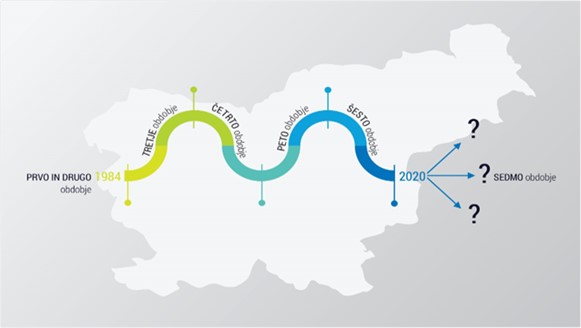
Source: Komljenović, 2023, page 147.
Slovenian Gambling Industry from 2005 to 2024
(Gross Gaming Revenue)
The analysis shows three key comparisons: the situation relative to the historical peak, long-term growth since 2005, and post-pandemic recovery.
Comparison with historical peaks (2024/best year 2005-2024)
Indices relative to best achieved year:
- Overall sector: 89
- Classical gaming: 113 ✅ (only segment above peak)
- Special gaming activities: 79 ❌
- Casinos: 74 ❌ (furthest from peak)
- Gaming halls: 77 ❌
Long-term comparison (2024/2005)
Indices by segment:
- Overall sector: 101
- Classical gaming: 166 ✅ (highest growth)
- Special gaming activities: 89
- Casinos: 74 ❌ (largest lag)
- Gaming halls: 139 ✅
Post-pandemic recovery (2024/2019)
All segments above pre-pandemic levels:
- Overall sector: 115
- Classical gaming: 131 ✅ (highest growth)
- Special gaming activities: 111
- Casinos: 111 ❌ (lowest growth)
- Gaming halls: 111
Key findings
- Heterogeneous picture of Slovenian gaming
- Classical gaming: the only segment that exceeds historical peaks and shows consistent growth
- Casinos: despite post-pandemic recovery, still far below historical achievements
- The total sector has stabilized and strengthened after the pandemic (+15%), but remains below its peak
- With the exception of Classical gaming, we are still far from the best years of gaming
- Within special games of chance, casinos continue to grow compared to the previous year, while gaming halls are recording a decline.
- The share of classic gaming in the total gambling sector has grown from 14.5% in 2005 to 24% in 2024
- Data on gambling activities conducted online are not publicly available in consolidated form, which consequently represents a gap in analysis. Appropriately obtained results could serve better decision-making for the future, while also providing a broader view and overview of gambling activities in Slovenia and comparison with global trends
- We estimate that the inclusion of a regional component in publicly available gambling data would represent an important addition to the existing reporting system. The introduction of such analysis would enable more precise monitoring of territorial specificities and development trends, thereby creating a stronger foundation for developing tailored approaches and measures that would more effectively address the specific needs of individual regions.
References:
Komljenović, A. (2023). The Slovenian Gaming Model in an International Context: Proposed Changes (doctoral dissertation). Kranj: Faculty of Government and European Studies.
Gambling Act (ZIS). Official Gazette of the Republic of Slovenia, No. 14/11 – official consolidated text, 108/12, 11/14 – corr. and 40/14 – ZIN-B.
Aggregate data on gambling in Slovenia for the period 2005-2016, Aggregate data on gambling in Slovenia for the period 2012-2018, Aggregate data on gambling in Slovenia for the period 2012-2020, Aggregate data on gambling in Slovenia for the period 2013-2023. Ministry of Finance of the Republic of Slovenia. URL: https://www.fu.gov.si/drugo/posebna_podrocja/igre_na_sreco/, 3. 1. 2020, 18. 9. 2020, 25. 8. 2023, 3. 2. 2025 and 15. 5. 2025.
Explanations:
According to the Gambling Act, classic games of chance include numerical lotteries, instant win lotteries, quiz lotteries, bingo, lotto, sports predictions, sports betting, raffles, and other similar games.[2]
Special games of chance are “games played by players against the casino or against each other on special gaming tables with balls, dice, cards, on gaming boards or on gaming machines, as well as betting and other similar games in accordance with international standards.”[3]
Under Slovenian legislation, online gambling[4] is not a separate type of gambling, but merely a method of organizing certain games of chance[5]. Organizing certain special games of chance via the internet or other telecommunications means (online gambling) can only be done by companies that have a concession for permanent organization of classic games of chance or a concession for organizing special games of chance in casinos.[6] Online games of chance are not permitted to be organized by companies that have a concession for organizing special games of chance in gaming halls.
Gross gaming revenue includes total stakes minus paid winnings, excluding tips and entrance fees.
In our opinion, the publicly available aggregate data for the Slovenian gambling industry and the way it is presented is not analytical enough, as the data does not show the share of special games of chance, nor the share of all games of chance organized via the internet or other telecommunications means (online gambling). The share of these by type of concessionaire (classic games of chance or special games of chance) is also not evident. This method of data presentation represents a deficiency and gap in further analysis and comparison of the Slovenian gambling industry at the European and broader global level, especially considering that games of chance conducted online or through other telecommunications means have been recording growth in both volume and share in the entire gambling sector in recent times.
ANNEXES:
Table 1 – Gross Gaming Revenue in Slovenia for the Period 2005 – 2024 (in million EUR)
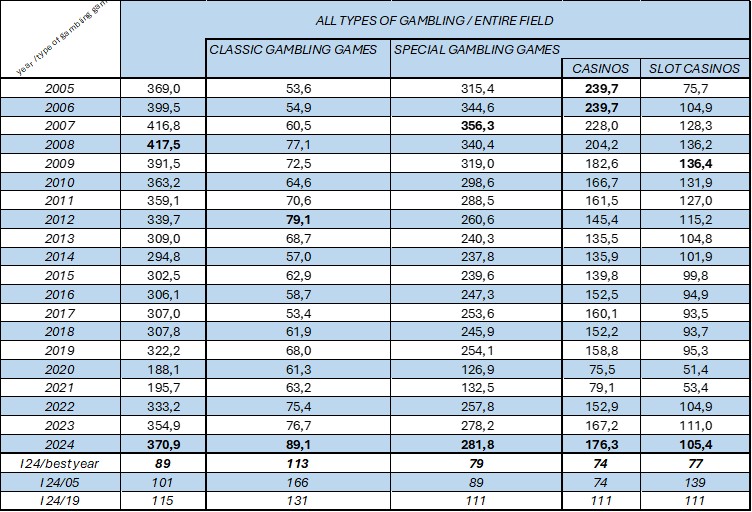
Source: Own work based on data from Compiled data on games of chance in Slovenia for the period 2005-2016; Compiled data on games of chance in Slovenia for the period 2012-2018; Compiled data on games of chance in Slovenia for the period 2012-2020; Compiled data on games of chance for the period 2013-2023; Compiled data on games of chance for the period 2014-2024, Ministry of Finance of the Republic of Slovenia, e-source.
Graph 1 – Movement of Gross Revenue from All Types of Games of Chance in Slovenia in the Period 2005-2024 (in million EUR)
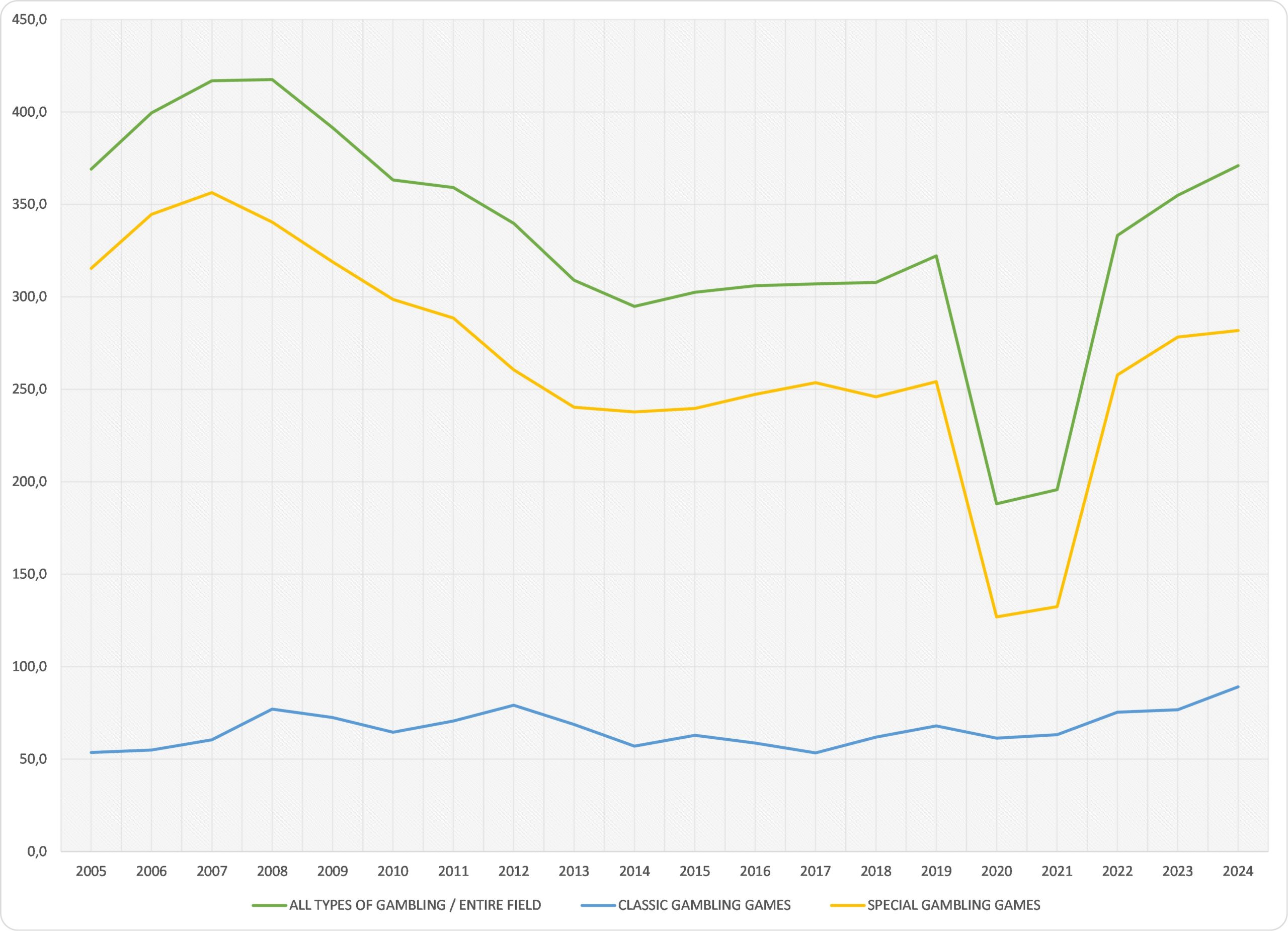
Source: Own work based on data from Compiled data on games of chance in Slovenia for the period 2005-2016; Compiled data on games of chance in Slovenia for the period 2012-2018; Compiled data on games of chance in Slovenia for the period 2012-2020; Compiled data on games of chance for the period 2013-2023; Compiled data on games of chance for the period 2014-2024, Ministry of Finance of the Republic of Slovenia, e-source.
Graph 2 – Movement of Gross Revenue from Special Games of Chance in Slovenia in the Period 2005-2024 (in million EUR)
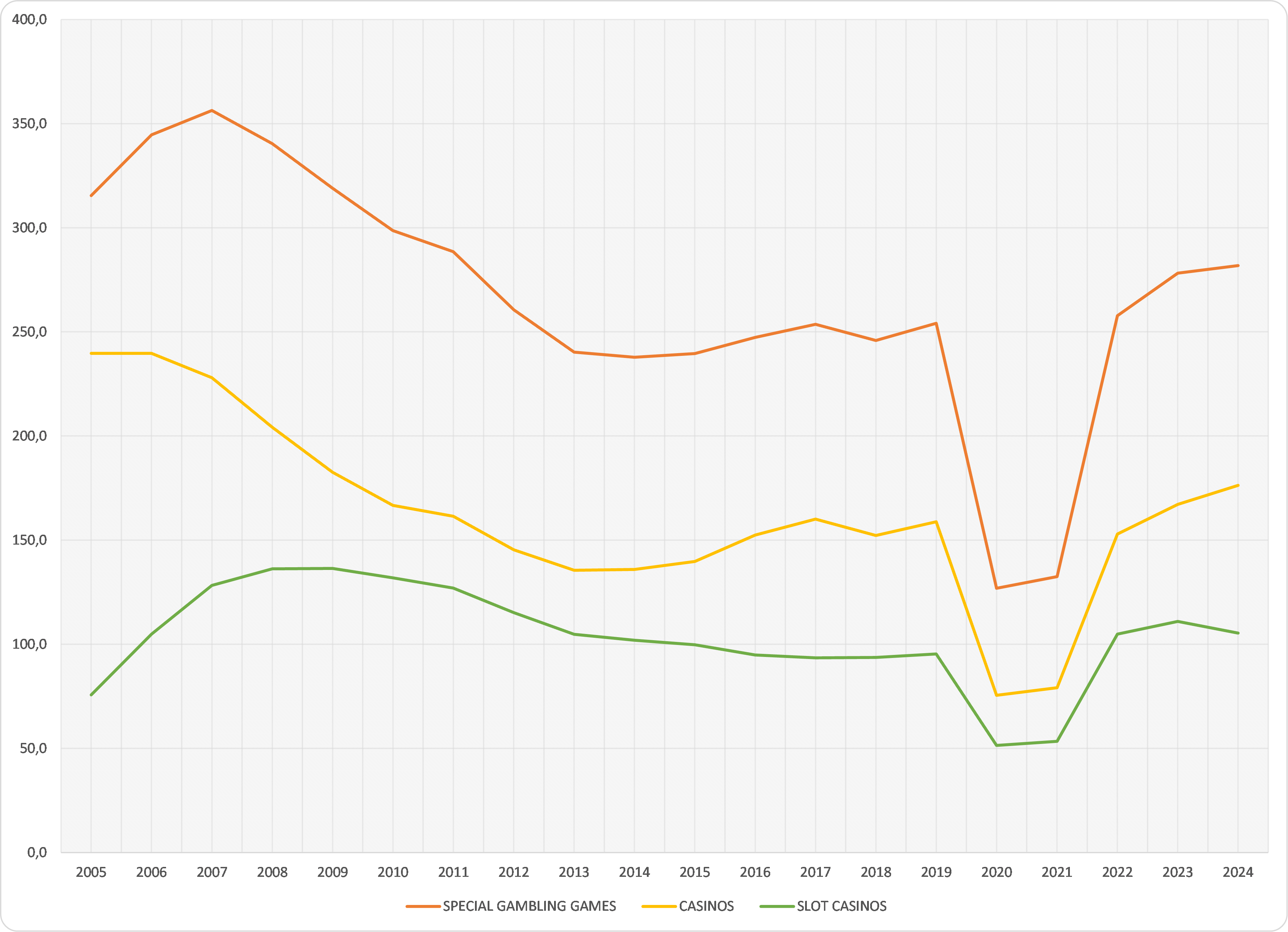
Source: Own work based on data from Compiled data on games of chance in Slovenia for the period 2005-2016; Compiled data on games of chance in Slovenia for the period 2012-2018; Compiled data on games of chance in Slovenia for the period 2012-2020; Compiled data on games of chance for the period 2013-2023; Compiled data on games of chance for the period 2014-2024, Ministry of Finance of the Republic of Slovenia, e-source.
Note: This text has been translated from Slovenian language with the help of artificial intelligence Claude.ai
[1] About the author: Aljoša Komljenović holds a PhD in international and diplomatic studies. He has been professionally involved in the gambling industry for more than two decades, and in recent years he has been dedicated to researching the Slovenian gambling industry in international frameworks and economic diplomacy, among other things. Email: aljosa.komljenovic@gmail.com.
[2] Gambling Act, Article 10.
[3] Gambling Act, Article 53.
[4] Games of chance via the internet or other telecommunications means. Gambling Act, Article 3a.
[5] All types of special games of chance except betting. Gambling Act, Article 53.
[6] Gambling Act, Article 53.